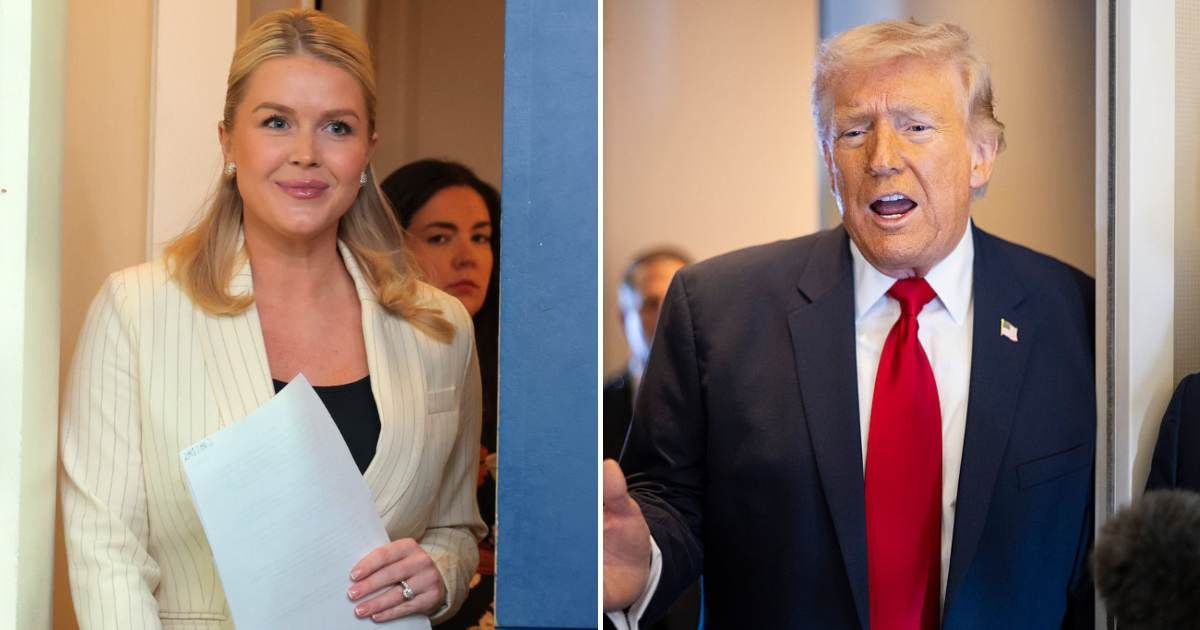
Decoding Karoline Leavitt's Stance on the Military Draft
The specter of a military draft often ignites fervent discussion and concern across the United States. In recent weeks, comments from White House Press Secretary Karoline Leavitt regarding this sensitive topic have fueled considerable public and media debate. Her remarks, made during a Fox News appearance, have been widely interpreted, sometimes with alarm, despite their carefully chosen diplomatic language.
During an interview with Maria Bartiromo, Leavitt was directly asked about widespread parental concerns: "Moms are worried we're gonna have a draft." Her response, while not an announcement of immediate plans, was nuanced and deliberate. Leavitt stated unequivocally that a military draft is “not part of the current plan right now.” However, she quickly added a crucial caveat: President Trump "wisely keeps his options on the table." This distinction between "not currently planned" and "not categorically ruled out" became the fulcrum of the ensuing controversy.
For many, particularly progressive groups and critics, Leavitt's phrasing was a startling admission, suggesting that a draft, though not imminent, remained a tangible possibility under a future administration. Activist posts and opinion pieces quickly seized upon the comments, presenting them as potential proof of an impending conscription. Yet, a closer examination of the available reporting reveals no internal White House documents, Pentagon statements, or other primary evidence indicating that a draft is being formally considered or that conscription processes have been activated. Leavitt's remarks were, in essence, a strategic refusal to limit the President's future options as Commander-in-Chief, rather than a declaration of intent. For a deeper dive into the precise wording and its interpretations, see our article: Karoline Leavitt on Military Draft: Deciphering Her 'Options'.
The "Options Open" Philosophy: A Commander-in-Chief's Imperative
Understanding Karoline Leavitt’s statement requires an appreciation for the complex role of the President as Commander-in-Chief, especially in an unpredictable global landscape. The argument that a leader "wisely keeps his options on the table" is rooted in the principle of national security and strategic flexibility. In an environment marked by escalating international tensions, such as the described conflict in Iran and the broader Middle East, a President might deem it essential to maintain all potential tools for defense and projection of power.
Leavitt elaborated on this philosophy, linking it directly to President Trump's perceived responsibilities. She emphasized that "there's no greater priority or responsibility to this president than, of course, protecting the American people and our troops and bases in the Middle East." Referencing Iran's historical threats and actions against American soldiers, Leavitt justified the administration's proactive stance, including the launch of "Operation Epic Fury." In this context, ruling out any option, however extreme, could be viewed as hamstringing a future response to unforeseen or rapidly evolving threats. It's a pragmatic approach that prioritizes adaptability over preemptive limitations, particularly when facing adversaries perceived to be a significant threat to U.S. interests and personnel.
This perspective contrasts sharply with what Leavitt suggested were tendencies among "a lot of politicians [who] like to do that quickly" – that is, to categorically rule out certain actions. For a Commander-in-Chief, the ability to assess, adapt, and respond to dynamic global challenges without self-imposed constraints can be seen as a strength, albeit one that can generate public anxiety when it touches upon deeply sensitive issues like military conscription.
Dispelling Misinformation: What the White House Has (and Hasn't) Said
The distinction between strategic non-commitment and an active plan is crucial, yet it was often lost in the swift dissemination of Leavitt's comments. The White House Rapid Response team took to X (formerly Twitter) to push back against what they perceived as mischaracterizations, directly refuting claims of an active draft plan by stating, "She didn't say anything close to this. You just made it up." This direct denial underscores the administration's position that Leavitt's remarks were twisted into something they were not.
Reports consistently reproduce Leavitt's noncommittal language, tracking the political fallout and the public's apprehension. However, these reports lack any concrete evidence—such as official White House directives, Pentagon announcements, or active changes to the Selective Service System—that would suggest a draft is anything more than a theoretical, unactivated option. The core message remains: a draft is "not part of the current plan." It's a critical nuance that separates thoughtful consideration of all possibilities from an imminent policy shift. For an in-depth look at how these claims went viral and what the reality entails, read: Leavitt's Draft Comments: Unpacking the Viral Claims & Reality.
The Selective Service System: A Historical Context and Present Reality
To further understand the context surrounding discussions of a military draft, it's essential to revisit the Selective Service System. The United States has not implemented a military draft since the Vietnam War in the 1970s, transitioning instead to an all-volunteer force. However, the legal framework for conscription remains in place. Male citizens and immigrants residing in the U.S., aged 18 through 25, are still required by law to register with the Selective Service System. This registration process does not mean they are entering the military, but it creates a database that could theoretically be used to reactivate a draft should Congress and the President deem it necessary for national security.
This ongoing requirement for registration means the infrastructure for a draft, while dormant, is not entirely dismantled. The existence of the Selective Service System is a practical reality that underpins any discussion about "keeping options open." It's a prudent measure to maintain readiness, reflecting a historical understanding that unforeseen global events might, in extreme circumstances, necessitate a return to conscription. However, initiating a draft would require significant political will, congressional approval, and a demonstrable national emergency, none of which have been indicated by current official statements or actions.
Practical Implications and Public Sentiment
The public reaction to Karoline Leavitt's comments highlights the profound sensitivity surrounding military conscription. For many families, especially "moms worried," the idea of a draft conjures images of past conflicts and the potential separation and danger for their loved ones. This deeply personal concern means that even carefully worded, non-committal statements can trigger widespread alarm and misinterpretation.
From a practical standpoint, the absence of an active draft plan means there are no immediate actions for citizens to take other than complying with existing Selective Service registration requirements for eligible males. Any future consideration of a draft would be subject to extensive public debate, legal processes, and clear governmental communication. For now, the public discourse serves as a reminder of the enduring importance of transparent communication from political leaders and the need for citizens to critically evaluate information, distinguishing between speculative interpretations and confirmed policy decisions.
Conclusion
Karoline Leavitt's statements regarding a military draft were precise: it is "not part of the current plan right now," but President Trump "wisely keeps his options on the table." This stance is fundamentally different from announcing an active conscription process. While the non-committal language sparked considerable debate and concern, particularly among those worried about escalating international conflicts, it did not signify an imminent draft. No official documents, Pentagon statements, or changes to the Selective Service System have indicated that a draft is formally being considered or activated. The existence of the Selective Service System means the mechanism for a draft theoretically remains, but its activation is a monumental decision requiring a national emergency and congressional approval. Understanding the nuance in Leavitt's remarks is key to accurately interpreting the White House's position, which emphasizes preparedness and strategic flexibility without committing to an immediate, unpopular, and currently unnecessary policy.